

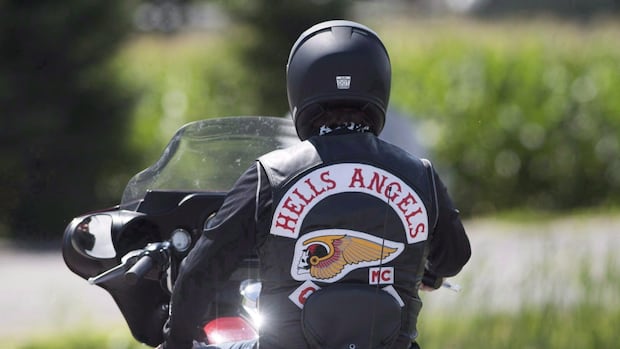
Those responsible for the application of Nova Scotia laws are worried about the possible increase in friction between rival motorcycle gangs with the opening of a new potential chapter of Motorcycle Club Outlaws in the Halifax region – an area that Hells Angels consider their territory.
“The Hells Angels can see this expansion of outlaws as a competitive and also disrespectful decision,” said Det. Const. Jeff Tremblett, an intelligence officer of the Criminal Intelligence Service of Nova Scotia, who represents all the police in the province.
“It could lead to violence,” he said. “Where they are in their backyard now, there can be more confrontation opportunities.”
The two motorcycles have been enemies for years.
Until now, the two groups have mainly been able to avoid each other, the outlaws installed in Cap-Breton. This changed in February when outlaws opened a potential chapter in Lake Echo, in the regional municipality of Halifax.
“With a new club starting in Halifax, the police think that rivalry could degenerate between the Hells Angels and the outlaws. The outlaws of Cap-Breton generally remained out of sight of the Hells Angels,” said Tremblett.

The Hells Angels have not had an official chapter in Nova Scotia since 2001, when their chapter of Halifax was closed by the police. But their basis of power in the province remained largely intact in their 10 support clubs.
The support clubs are small groups that have lined up on a larger and more powerful biker gang. These clubs copy the structure of the gang with which they have teamed up and follow the orders of the dominant club.
The members of the support club can be used to help criminal activities and protect the dominant club against prosecution, said Tremblett. Clubs also act as a recruitment ground for new potential members and help channel money at the dominant club thanks to the sale of goods such as shirts and hats with the gang logos.
In Nova Scotia, the Red Devils and several other groups are support clubs for the Hells Angels, while the Black Pistons support the Moto Outlaws club.

It is not clear why the outlaws have chosen to develop in Halifax where the Red Devils are located.
“Right now, it is not clear if the expansion is to take more control over the illicit drug trade in Nova Scotia,” said Tremblett.
Generally, each gang wants better control of the ports of Nova Scotia to move illegal drugs more easily such as cocaine, methamphetamine and illegal marijuana. They also want to establish networks to move drugs from the province to the province.
The Hells Angels and the Outlaws have been rival across North America for years, and have even been faced in Nova Scotia before, but so far, I have not had any blows.

In 2019, things became tense between the two groups at a motorcycle fair at the Halifax exhibition park. Supporters of Hells Angels and members of black pistons had heated words when they met.
It was almost the same The groups entered an ardent verbal exchange on the main street of the community.
There are 14 Motorcycle Outlaw gangs active in Nova Scotia right now, according to Tremblett:
• Outlaws MC – CAP -Breton
• Outlaws MC – Halifax
• Black Pistons MC – Breton cape (Outlaws Support Club)
• Highlanders MC – Breton cape (Hells Angels Support Club)
• Highlanders MC – Antigonish County (Hells Angels Support Club)
• Highlanders MC – Pictou County (Hells Angels Support Club)
• Katt Sass MC – New Glasgow (Hells Angels Support Club)
• Red Devils MC – Halifax (Hells Angels Support Club)
• Darksiders MC – Dartmouth (Hells Angels Support Club)
• MC sedition – Fall River (Hells Angels Support Club)
• MC – Yarmouth sedition (Hells Angels Support Club)
• Bacchus MC – Sambro
• Niners MC – McGraths Cove (Hells Angels Support Club)
• 103 riders – South Shore (Hells Angels Support Club)
Tremblett said it was very difficult to close these clubs.
“Police must prove that there are laws buried in the clubhouse. There are rental agreements, rights of people inside, so for police, it is not an easy task to go and close it.”

Often, the police will have to associate municipal agencies to determine if the clubs comply with the regulations of a community, and if they are not, the clubs can be closed, said Tremblett.
He said that people have to remember that most motorcycle clubs are made up of law-respecting citizens, and only about one percent of clubs are in fact hors-la-law motorcycle gangs.
Clubs managed by gangs are generally easy to spot because they have a lot of video surveillance, they often have painted windows and usually wear the gang logo.

Anyone with concerns about motorcycle outlaw gangs in their region can contact their police, municipal or municipal councils, and the group of communities and safer neighborhoods to get advice, Tremblett said.
“Do not believe the story that often goes around this … Your Moto Outlaw gangs are only good old boys who like to go out and party and do good for the community. This is not the case,” said Tremblett. “They want the public to consider them as community minds, and they want people involved in organized crime to fear them.”
