

Can new Peruvian President José Jerí win his “war on crime”?

The “war on crime” proposed by Peru's new president faces major challenges as he seeks to extricate the country from an ever-worsening security crisis.
José Jerí, of the conservative Somos Perú party, assumed the presidency on October 10 after Congress voted to impeach Dina Boluarte. Congress made this decision after widespread protests in response to its government's perceived inability to combat, among other things, rampant organized crime and corruption.
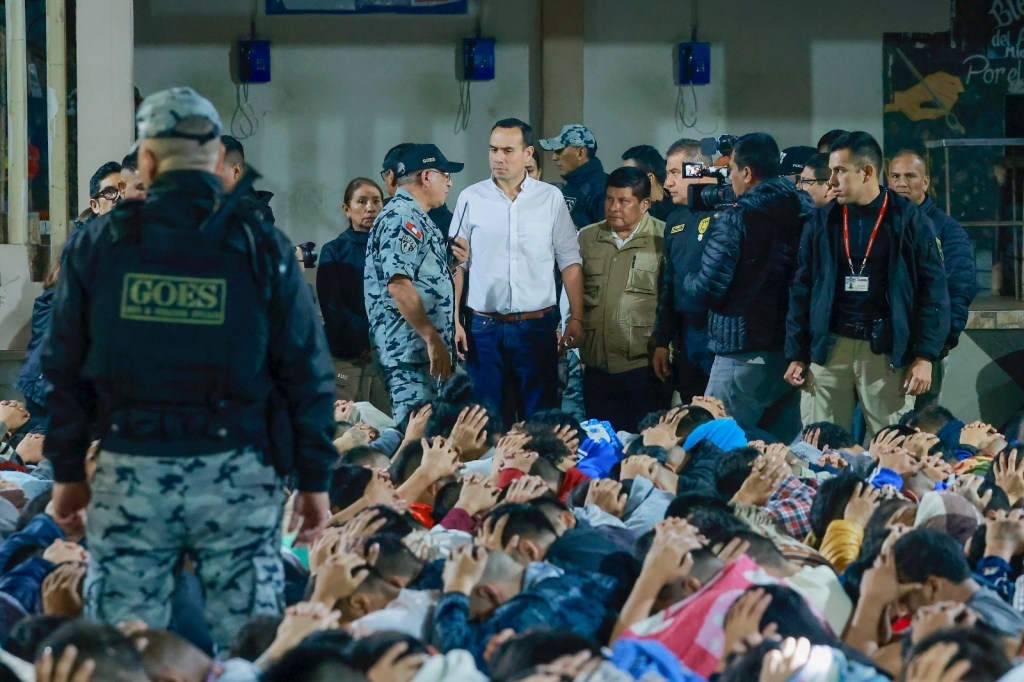
Jerí is expected to lead a transitional government until the country's next president is chosen in general elections in April next year. He has been dynamic, promising a crackdown on crime and joining police in operations at several prisons aimed at reducing criminal control within the facilities. On October 23, the Peruvian Congress approved a bill proposed by Jerí which aims to combat extortion – currently a major criminal problem in Peru – and sponsored assassinations that impact the public transport sector by creating a national register of vulnerable transport companies and stimulating the sharing of information between official bodies.
SEE ALSO: Are the new laws really worsening the security crisis in Peru?
Yet the first weeks of his mandate have drawn unfortunate parallels with those of his predecessors. On October 15, during the first large demonstration since Jerí came to power, a police officer reportedly shot and killed a protester, and more than a hundred people were injured. On October 21, the president announced a state of emergency for 30 days in the cities of Lima and Callao.
Organized crime thrives on the streets and behind bars
Jerí prioritized Peruvian prisons which, due to their overcrowding and lack of staff, are difficult to control. Prisoners engage in criminal activities on the streets behind bars.
“This issue of the lack of control and a truly punitive regime within prisons and their separation from the outside world (…) prevents prisons from fulfilling their true purpose,” Sebastián Flores, director general of the National Consultation of Criminology (Consultora Nacional de Criminologia) told InSight Crime.
Recent actions to increase prison security go beyond prison raids, with the imposition of stricter restrictions on visits and the reduction of electricity supplies to allow only cell lighting, to prevent prisoners from charging phones used to contact the outside world. The director and deputy director of a Piura prison were dismissed on October 19 and five prison officers were arrested for allegedly facilitating the escape of a prisoner from the facility.
While the former director of Peru's prison system claimed in January 2024 that extortion within prisons was not a major problem, the current director admitted that cell phone signal blocking technology used in prisons was outdated.
But prisons are only one piece of the puzzle. Cases of extortion are skyrocketing, or what is called “I have a gota“Usury (“drop by drop”) loans and the violence associated with these crimes are major factors of insecurity, thus contributing to a 36% increase homicides in 2024.
Extortionists have expanded their traditional victim base, made up of groups such as transportation workers and small businesses, to include targets such as schools And musicians.
SEE ALSO: Extortion 'monster' now Peru's most wanted criminal
“Fear is widespread,” Nicolás Zevallos Trigoso, former Peruvian deputy minister of public security and director of the nongovernmental organization the Institute of Criminology (Instituto de Criminología), told InSight Crime. “They're knocking on the door saying, 'Hey, you have to pay.' It's so close that it sparks fear that it could happen to anyone.
He added that small criminal groups engaging in predatory crimes such as extortion and loan sharking have emerged, with criminals taking advantage of Peru's largely informal and unregulated economy and the inability of informal workers to access loans from financial institutions.
Illegal mining bands have also highlighted insecurity in rural Peru, notably with the discovery of the bodies of 13 security agents massacred in a mine in Pataz, in the department of La Libertad (northwest), in May. Record gold prices will further incentivize organized crime groups to illegally mine gold, which thrive on a weaker state presence in rural areas. While authorities in urban areas may focus on using specialized extortion units to map and monitor gangs, solving this problem will require rural law enforcement to focus on dismantling illegal mining logistics and seeking to control the spread of coca cultivation into new areas. An effective strategy will also need to target the corruption that facilitates illegal mining.
Previous attempts to combat organized crime have had little success
Jerí, like his predecessors, must also be careful to avoid repeating the mistakes of his predecessors in his fight against crime. Previous administrations regularly imposed a state of emergency as part of his promise to act quickly against rising crime. But past ordinances only temporarily pushed crime elsewhere, rather than reducing it, according to Zevallos Trigoso.
“There is clear evidence that they don’t work,” he said. “They constitute an immediate palliative, but are not lasting.”
A similar balloon effect can be seen in the way drug traffickers have responded to state initiatives. Although government efforts to target traditional coca enclaves have seen coca cultivation nationwide decline in absolute terms, from 95,000 hectares in 2022 to just under 90,000 hectares in 2024, according to official figures, this figure remains much higher than in the years before 2022, and cultivation has expanded to new areas.
Zeballos Trigoso and Flores agree that it will be necessary to focus more on police intelligence, rather than a brute force approach, to effectively combat organized crime.
Institutional problems hamper crime-fighting efforts
The lack of political and institutional stability, which has resulted in a back-and-forth between presidents, interior ministers and police officers, has contributed to the absence of long-term crime reduction strategies.
Jerí, Peru's sixth president since 2020, faces corruption allegations, which he has denied. He also resisted accusations of sexual abuse, although the case against him was archived due to lack of evidence.
Corruption tainted the legacies of many of Jerí's predecessors. Although Peru's Constitutional Court suspended investigations into Boluarte for the remainder of his term, two other ex-presidents are serving prison sentences for corruption-related offenses, three others are facing legal proceedings and another committed suicide when police came to his home to arrest him.
But it is not only the executive branch of the state that is steeped in corruption. Politicians and police at all levels provide protection to criminal organizations. Combating this phenomenon effectively will likely take more time than Jerí had.
Any steps the new president plans to take to stem the tide of organized crime could be moot if he fails to generate and maintain enough popular support to stay in power. Former President Manuel Merino was forced to resign after just five days in office following the deaths of two protesters in November 2020. A Peruvian lawmaker proposed a vote of no confidence against Jerí after the death of a protester on October 15, but the motion failed to gain support.
Featured image: Peruvian President José Jerí watches a prison operation. Credit: Office of the President of Peru.
The position Can new Peruvian President José Jerí win his “war on crime”? appeared first on Crime in sight.
