

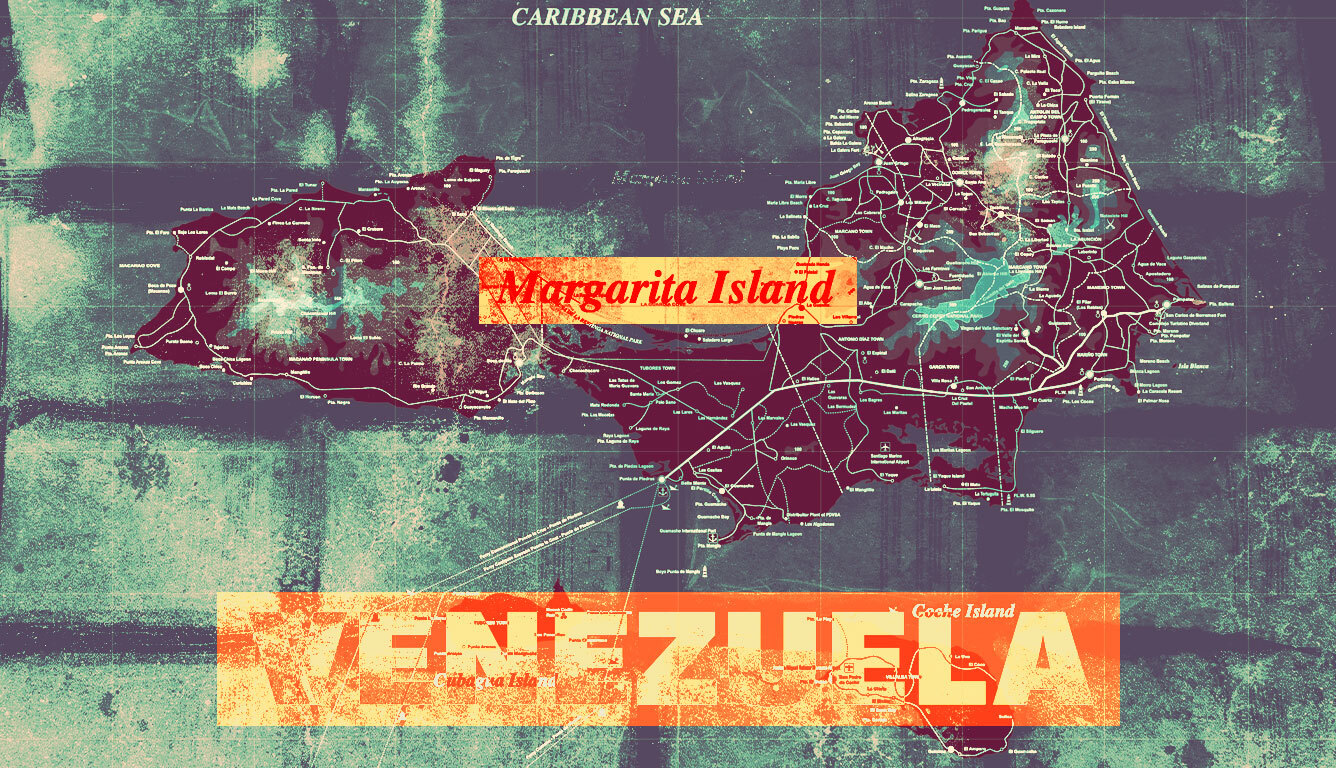
The little fishing boat Sédna set sail as usual on the morning of June 3 from Punta Arenas, one of the docks on Margarita Island in Venezuela, in the Caribbean.
Five days later, the fishermen reported to their families that they were adrift after an engine failure. Then all contact was lost.
On land, there was growing fear that the sailors had been swallowed up by the sea. But they met a different fate. A few weeks later, their loved ones discovered that Sédna had been intercepted by the American Coast Guard during an operation which seized 1 ton of cocaine and 1.5 tons of marijuana from several boats, including theirs.
SEE ALSO: Drug traffickers used Isla Margarita in Venezuela as a backdoor to Europe
The tourist hotspot of Margarita Island, in the northeast of mainland Venezuela, is not only the country's “Pearl of the Caribbean” for its idyllic beaches. It is also a strategic center on drug trafficking routes to the Caribbean and Europe. Local fishermen, criminal networks and even security officials are involved in this lucrative but risky illicit economy.
Recently, the landscape has changed. The presence of American warships and aircraft in the Caribbean – as part of a anti-drug operation by the administration of President Donald Trump – transformed Margarita Island. Fishermen and traffickers now face not only the dangers of the sea, but also the threat of finding themselves in the crossfire of a military strike.
A former criminal enclave
For decades, Margarita Island was a bustling criminal enclave run by local crime bosses, who focused primarily on drug trafficking. One of the best known figures was Teófilo Rodríguez Cazorla, aka “The Conejo», a trafficker who for years controlled the now closed San Antonio prison, located in the southeast of the island.
Rodríguez Cazorla is said to have maintained ties with senior officials in President Nicolas Maduro's government, including the former Minister of Prisons. Iris Varelawhich would have allowed him to transform the prison into a center of criminal operations. In 2016, Rodríguez Cazorla was killed and control of drug trafficking on the island was transferred to a network led by Jhonny Alexander Silva Rodríguez, aka “Justin.” According to a decision Per Venezuela's Supreme Court of Justice, Silva was arrested on Margarita Island in 2009 on microtrafficking charges, but later escaped from prison.
Silva's operations ended in February 2023 after a raid by the Bolivarian National Guard (Guardia Nacional Bolivariana – GNB), which was not reported in local media.
Yet Margarita's international drug connections persisted because of its strategic location. THE arrests European traffickers on the island in recent years suggest it continues to serve as a springboard for shipments to the Caribbean, Central America and Europe.
Among the most notable cases, we can cite that Arrest in September 2023 of a Polish national, the subject of an Interpol red notice, wanted for his alleged role in a trafficking network operating in Europe and the Americas.
Despite this, Margarita Island currently shows no signs of large organized criminal groups, and the state of Nueva Esparta, where the island is located, was among the least violent states in Venezuela in 2024, with a homicide rate of 16.1 per 100,000 inhabitants, according to the Venezuelan Observatory of Violence (Observatorio Venezolano de Violencia – OVV).
Although crime rates remain low, state forces are increasingly encroaching on the island's criminal scene in hopes of controlling profits generated by coastal drug trafficking.
Expanding state control
THE Sédna was one of the few boats that managed to bypass the network of maritime checkpoints that have mushroomed around the island in recent years.
Crime on Margarita Island is now regulated by state officials and lesser-known networks, according to local journalists, residents and fishermen interviewed by InSight Crime.
Since 2023, the Venezuelan government has installed outposts of the Directorate of Aquatic Spaces of the Bolivarian National Police in the ports of Margarita. Fishermen told InSight Crime that anyone wishing to set sail must undergo a vessel inspection and obtain authorization from the police or navy, in addition to the authorization issued by the National Institute of Aquatic Spaces (Instituto Nacional de los Espacios Acuáticos – INEA).
“Now we have the Coast Guard and the water police, and they never sleep. All night long they're out there,” a fisherman from El Tirano told InSight Crime.
The enhanced security presence appears to be aimed at ensuring that any drug shipments leaving Venezuelan territory do so with government approval – something made easier by putting the money in the right hands.
Fuel for fishermen is also tightly controlled by the state, with a maximum of around 120 liters per week. The restriction aims to prevent unauthorized drug runs, but it also impacts legitimate fishing trips. “It's not enough to go far and you risk coming back empty-handed. If you go out today, you won't have gas to leave tomorrow,” explains the fisherman.
Despite heavy patrols and restrictions, authorities discovered unauthorized boats carrying drugs, high-powered outboard motors and hundreds of liters of fuel during sporadic security operations.
In March 2024, for example, the police found a boat adrift near Macanao, in the southwest of the island, with 270 kilograms of marijuana and more than 700 liters of fuel. The operation suggests that those involved may not have paid their “fees” to local security forces.
Cooperation or deterrence?
The U.S. military buildup in the Caribbean could reshape the drug trafficking landscape around Margarita Island.
Between 2022 and 2024, several Venezuelan boats carrying several tons of drugs were intercepted en route to Martinique and Guadeloupe. These seizures are the result of cooperation between the Venezuelan and French authorities, demonstrating the desire of the Venezuelan government to act against networks operating outside of its control.
One of these cases concerned a fishing boat which left from Margarita Island and was found in May 2024 near Martinique with 2.4 tonnes of cocaine on board. French authorities, who led the seizure, said the drugs were likely transferred by sea.
While France has favored police cooperation, the United States has opted for deterrence, maintaining a military presence in the Caribbean since August 2025. According to American officials, the campaign has carried out 19 strikes, killing more than 70 people as of November 12.
SEE ALSO: US drone attack highlights Sucre's role in Venezuela's cocaine corridor
Recent U.S. attacks on suspected drug boats could temporarily deter traffickers operating from Margarita Island, as has happened in other coastal states like Falcon and Sucre. Local fishermen may also avoid going to sea, as it now carries the same risks whether they are carrying nets or narcotics.
For now, those involved in Margarita Island's drug trafficking rings must choose between shutting down their operations, finding alternative routes or running the risk of becoming a missile's next target.
