

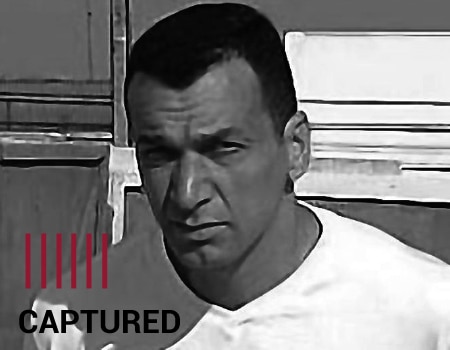
Marcos Willians Herbas Camacho, known under the pseudonyms “Marcola” and “Playboy”, is the main leader of Brazil's largest and most powerful criminal organization, the First command of the capital (Primeiro Comando da Capital – PCC), since 2002. Marcola built his notoriety in the São Paulo underworld in the late 1990s thanks to a series of bank robberies, before rising through the ranks of the PCC. Although Marcola spent most of his life in prison, he is believed to have been running the CCP's criminal operations from behind bars since the early 2000s.
History
Marcos Willians Herbas Camacho was born in São Paulo to a Bolivian father and Brazilian mother in 1968. Orphaned at age nine, he began wandering the streets of the sprawling metropolis as a petty thief. Around this time, he earned his lifelong nickname “Marcola” – a combination of his first name and the word “cola,” Brazilian slang for a powerful industrial glue that he often inhaled. Marcola's criminal activities progressed from petty theft to more serious thefts, until he was first arrested in 1986 for robbing a bank.
After his arrest, Marcola began serving his sentence in the overcrowded and prisoner-controlled Carandiru prison in the city of São Paulo. In 1992, security forces massacred more than 100 detainees in Carandiru, paving the way for the emergence of the CCP. The year after the Carandiru massacre, Marcola was transferred to another prison called Taubaté, inside the state of São Paulo. By the time he arrived, a group of inmates – including PCC co-founders José Márcio Felício, aka “Geleião,” and Marcola's childhood friend Dionísio César Leite, aka “Cesinha” – were beginning to form a prisoners' rights group. Marcola remained somewhat on the fringes of the group but was eventually baptized into what was then called the Crime Party (“Partido do Crime”).
Marcola was later transferred to Carandiru and he began to command increased respect among the inmates. He was also able to escape from prison several times to continue his criminal activities. As a fugitive, Marcola lived most of the time in Paraguay, but often planned and executed large-scale robberies of banks and armored vehicles in São Paulo. By the late 1990s, he had gained a reputation as a notorious bank robber, earning the second nickname “Playboy” due to his taste for luxury cars, expensive watches and designer clothes.
Marcola was already well established in the São Paulo underworld when he decided it would benefit him to officially join the Taubaté prison gang that had transformed into a criminal organization called the First Command of the Capital (Primeiro Comando da Capital – PCC). Marcola, who is often described as a “devourer of books” and an “intellectual”, quickly rose through the ranks and became the next commander behind PCC co-founders Cesinha and Geleião.
In July 1999, the PCC carried out the largest bank robbery in the history of São Paulo, stealing more than 32 million Brazilian reais (approximately $18.3 million based on the exchange rate at the time). Later that month, São Paulo police spotted Marcola driving one of his imported luxury cars and arrested him. He has been in prison ever since.
Marcola was sentenced to 232 years and 11 months in maximum security prison for robbery, drug trafficking, homicide and forming a criminal group. He began serving his prison sentence in the early 2000s. According to the book “Blood Ties: The Secret History of the PCC” (“Laços de Sangue: A História Secreta do PCC”), he may have served as a police informant, using his lawyer and ex-wife Ana Maria Olivatto to pass information to authorities, including the cell phone numbers used by the leaders imprisoned from the PCC, Cesinha and Geleião. According to recordings of telephone conversations made by the authorities, the two PCC leaders were placed in solitary confinement in the maximum security Presidente Bernardes prison in São Paulo.
The PCC leaders perhaps suspected betrayal on Marcola's part. In 2002, Cesinha was suspected of ordering Olivatto's murder, and Geleião allegedly provided authorities with information that led to the arrest of several members of Marcola's entourage that year. Nevertheless, Marcola seems to retain the trust of the other members of the PCC and takes the lead of the group. He began establishing a new prison communications network that relied on a team of lawyers to pass messages between imprisoned leaders.
Under Marcola's leadership, the CCP expanded outside prison walls and began operating as an increasingly sophisticated criminal organization involved in lucrative illicit activities like drug trafficking. In 2006, after authorities announced plans to transfer hundreds of prisoners, including Marcola, to higher-security prisons, the CCP staged a series of massive prison rebellions and coordinated attacks in São Paulo that left more than 150 people dead and virtually paralyzed the city.
In the aftermath of the deadly 2006 attacks, Marcola gained cult notoriety in Brazil when a fictitious “interview” attributed to the PCC leader was published by O Globo columnist Arnaldo Jabor, which fueled fears of criminal violence and control. In 2017 and 2018, the same fake interview was recirculated on social media and messaging platforms like WhatsApp, once again shining the spotlight on Marcola.
The interview is an illustration of both real and virtual control of the CCP over many regions of Brazil. The group acts as a parallel state in much of the country, administering justice, providing employment and offering protection from other rival predatory criminal organizations or state security forces.
Throughout his prison sentence, Marcola continued to act as the main leader of the PCC, although he was transferred to different prisons in Brazil and placed in long-term solitary confinement. In 2014, he had to be relocated after authorities discovered that the CCP was planning to free him using a helicopter painted with military motifs. A similar one plan was thwarted in 2018 and demanded that Marcola and 21 other senior CCP members be moved again.
In February 2018, Marcola was also sentenced to an additional 30 years in prison for leading the network of lawyers which allowed the exchange of messages between imprisoned CCP leaders and the payment of bribes on behalf of the criminal group to officials.
In 2024, Marcola was involved in the worst of the CCP internal crisisdue to a fight with three other leaders. In a leaked recording, Marcola called Roberto Soriano, aka “Tiriça,” a “psychopath,” which was used in the criminal case against him. Tiriça joined Abel Pacheco, aka “Vida Loka,” and Wanderson Nilton de Paula Lima, aka “Andinho,” in issuing a statement demanding Marcola's expulsion from the CCP. Marcola responded with another declaration ordering the expulsion and death of the other three leaders.
Criminal activities
Marcola gained notoriety as a bank robber before rising through the ranks of the CCP and eventually assuming the role of top leader of the group. Under his leadership, the PCC expanded its drug and arms trafficking activities throughout Brazil and into neighboring countries such as Bolivia and Paraguay.
Geography
Although Marcola has been imprisoned in various São Paulo prisons for much of the past three decades, under his leadership the PCC has expanded its reach far beyond its stronghold in Brazil's most populous and economically important state. The group established a presence in many parts of Brazil, developed ties in almost every country in South America, and established relationships with several European crime groups – particularly with Italian mafias, such as the 'Ndrangheta.
The CCP has even baptized members in Europe, particularly in Portugal, which has the most CCP members outside of Latin America, according to the São Paulo Public Prosecutor's Office.
Allies and enemies
Marcola's closest ally is Gilberto Aparecido Dos Santos, aka “Fuminho», who is the number two of the CCP.
Marcola's brother, Alejandro Juvenal Herbas Camacho Júnior, alias “Marcolinha”, continues to to assist with monitoring of CCP operations from prison. Marcos Roberto de Almeida, aka “Tuta” was considered to be the leader of the PCC outside of prison, having apparently been hand-picked by Marcola. However, he was arrested in Bolivia in May 2025.
Andinho is Marcola's main rival within the PCC. Other opponents include Vida Loka and Tiriça, who left the PCC after the gang's latest internal crisis, and members of the party based in Rio de Janeiro. Red order (Order Vermelho).
Outlook
Although the dismantling of this communications network, the loss of some key leaders, and internal divisions may have disrupted the PCC's activities, Marcola appears to have maintained firm control over the PCC by working with the gang's deputy leaders. He appears to enjoy broad support among the CCP's networks outside of prisons, suggesting that he will likely retain his position as the gang's leader for the foreseeable future.
