

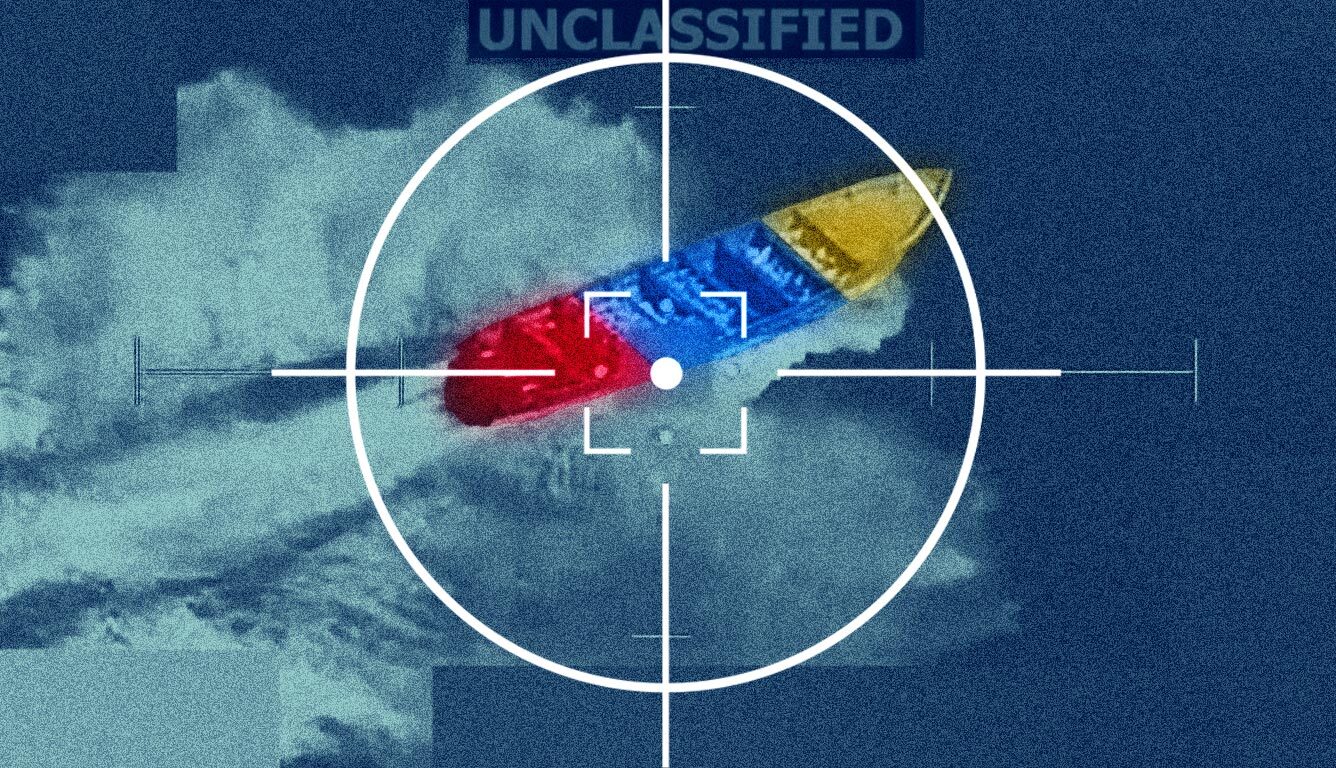
The world has been waiting for weeks to see whether the United States will escalate its militarized counter-drug mission in the Caribbean to a direct intervention aimed at overthrowing the regime of Venezuelan President Nicolás Maduro, sparking intense debate over the wisdom and potential impacts of such action.
The military buildup began in late August, with U.S. warships being sent to patrol international waters near the Venezuelan coast, ostensibly to disrupt drug trafficking. In September, the US military began conducting operations airstrikes on small boats leaving Venezuela and Colombia – a tactic now used in both the Caribbean and the Pacific.
President Donald Trump's administration has not said whether ousting Maduro is the ultimate goal, although credible media reports have indicated that senior officials have seriously discussed the possibility.
When Trump was interviewed by the CBS show 60 Minutes earlier this month if he would go to war with Venezuelahe said: “I doubt it. I don't think so.” But asked if he thought Maduro's days as president were coming to an end, he said: “I would say yes. I think so, yeah.”
Some experts and analysts say ousting Maduro by force is the only way to restore democracy to Venezuela and end the war. Hybrid criminal state that he established, where illegal armed groups act as proxies of the state and where organized crime networks operate within state institutions.
Others counter that intervention could make a bad situation worse, disrupting a relatively stable criminal landscape and potentially complicating the reestablishment of governance by legitimate institutions.
InSight Crime Tracks US Attacks on Drug Trafficking Organizations.
The arguments in favor of intervention
Supporters of intervention argue that Maduro's government essentially amounts to a criminal organization that has taken over Venezuela and that nonviolent means have proven insufficient to solve this problem.
“This is essentially a very large criminal enterprise that is essentially using state power to kidnap an entire society,” said Pedro Burelli, a Venezuelan activist and consultant. “Either the kidnappers get what they want…or someone with a lot more force than them comes in and solves the problem.” »
The Trump administration Maduro accused of running the Suns Cartel, which he has now added to his list of terrorist designations, describing it as a centrally coordinated criminal operation that supports the Mexican Sinaloa Cartel as well as the Venezuelan Tren de Aragua gang, which the United States has also designated as terrorist groups.
However, the Suns Cartel is not a hierarchical criminal group, but rather a complex set of corruption networks through which members of the military and political actors profit from drug trafficking and other illegal activities. Rather than running an organization, Maduro facilitates these arrangements to ensure the loyalty of those involved to the regime.
The Maduro government offers little support to the Sinaloa Cartel and the Tren de Aragua. Mexican traffickers appear to be leave parts of Venezuela as the government favors local criminal allies and Venezuelan authorities have dealt significant blows against Tren de Aragua over the past two years, including chase the gang from its stronghold and its base of operations, the Tocorón prison.
There is, however, near-universal agreement that Maduro oversees and authorizes a wide spectrum of criminality in Venezuela, and that his continued power ensures the sustainability of this system.
He has used alliances with criminal actors to suppress nonviolent protests and rigged elections to consolidate control. Venezuelan officials have also evaded international sanctions through the use of cryptocurrencies and corruption.
“Some autocracies are inherently unreformable,” said Paola Bautista, a Venezuelan political activist and academic. “All other means have been tried and have had no effect.”
Flashback potential
Other experts warn against escalation, saying it risks creating open conflict on multiple fronts involving a range of powerful non-state armed actors.
Ousting Maduro by force could create a power vacuum and open the door to his criminal allies, such as the guerrillas of the National Liberation Army (Ejército de Liberación Nacional – ELN) and violent pro-government organizations called collectives, to deepen their current control over important political and territorial spaces.
A full transition to democracy would require not only defeating the Venezuelan military, but also regaining control of these non-state actors. It would likely be a daunting task, reminiscent of the U.S. experience in Iraq in the 2000s and 2010s, but without the complexities of religious and ethnic divisions.
“My fear is that they have no plan for the next day. This is all being made up as they go along,” said Phil Gunson, an International Crisis Group analyst based in Caracas.
Trump suggested his administration could carry out airstrikes in Venezuela against suspected drug trafficking infrastructure, similar to those carried out in international waters. However, given that Venezuela is primarily a transit country, where drugs are moved from storage points to shipping points that are constantly changing and extremely difficult to identify without intelligence on the ground, it is difficult to know what these targets would be.
SEE ALSO: Special Series – Deadly US Strikes on Suspected Drug Traffickers
Additionally, any military operation inside Venezuela would require the United States to engage directly with the Venezuelan military, even if non-state criminal groups were the ultimate target, said Geoff Ramsey, a Venezuela expert at the Atlantic Council think tank.
“The order of operations here would be to first destroy Venezuela's air defenses, which would require engaging directly in conflict with Venezuela,” Ramsey said. “The escalation ladder doesn’t have as many rungs as you might think.”
What is likely to happen
The desire to see Maduro leave power is widespread, but there is disagreement over how to achieve this goal.
Opposition leader Maria Corina Machado, who won the Nobel Peace Prize in October, has expressed support for the Trump administration's military deployment as a way to pressure Maduro's regime, although she has stopped short of advocating an invasion. The leader of another opposition faction, Henrique Capriles, favors a peaceful, negotiated transition.
A recent survey showed that most respondents in Argentina, Brazil, Chile, Colombia and Mexico support U.S. military intervention in Venezuela.
But a full-scale invasion remains unlikely, given its unpopularity in the United States. A recent split the survey showed Most people surveyed in the United States oppose the idea, and CNN reported that the Trump administration told Congress as much. lack of legal justification for military action inside Venezuela.
The U.S. military deployment and strikes on suspected drug boats are unlikely to have a lasting impact on Venezuela's drug trafficking and criminal dynamics. Drug traffickers are very adaptable and simply change routes to avoid strikes. Moreover, these pressures could backfire, encouraging Maduro and his criminal allies to form closer ties rather than drive them apart, as the US government makes it clear that their fates are now intertwined.
