

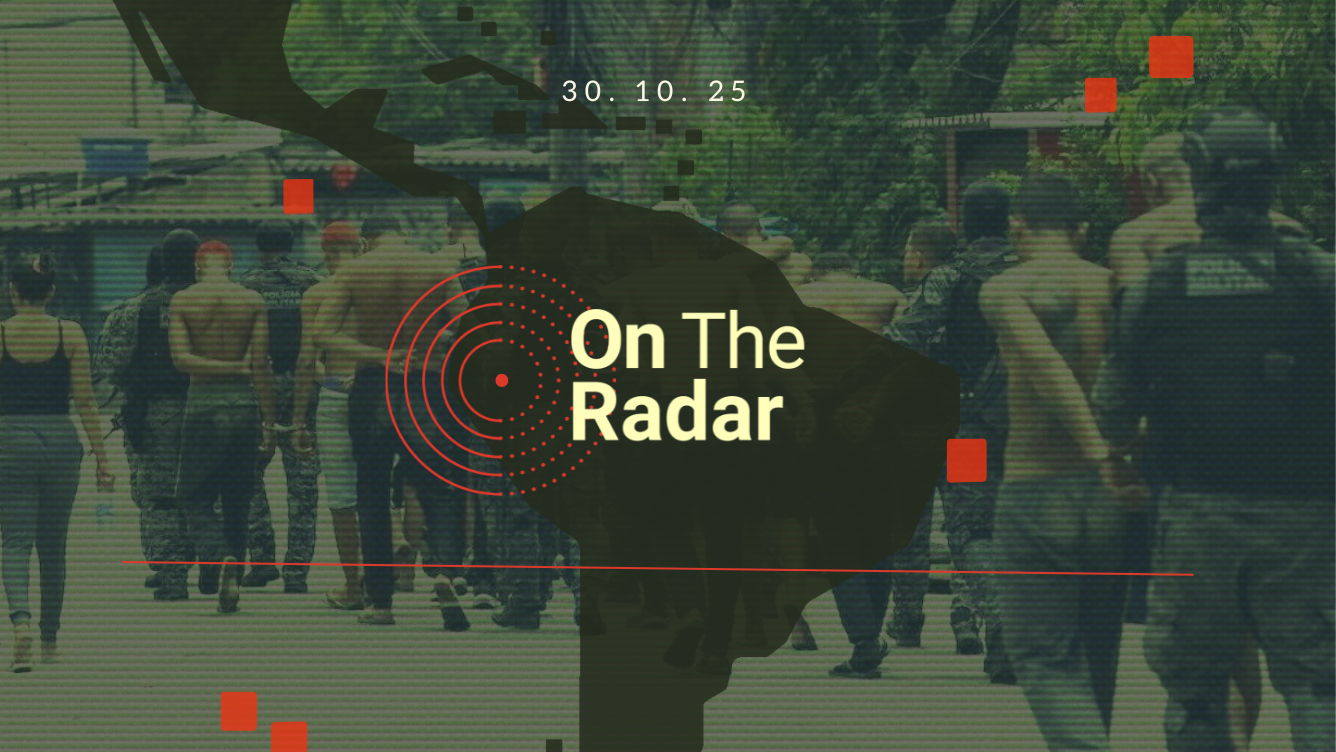

This week, we focus on new military strikes in the Caribbean and Pacific, reflect on the conviction of a Bolivian drug czar in the United States, and examine the deadliest police raid ever in a favela in Rio, Brazil.
Transcription
Welcome back to On the Radar, where we track the biggest developments in organized crime in the Americas each week. And this week, we look at government corruption in Bolivia, the bombing of new boats in the Pacific, and a deadly raid on a favela in Rio.
The Trump administration bombed four more ships in the Eastern Pacific on Monday, killing 14 people, the highest daily death toll since the US government began its military campaign against suspected drug traffickers in the region in early September. The attacks came days after the Trump administration sent an aircraft carrier to the region, already a major escalation of military power.
The aggressive military action off the coasts of Venezuela and Colombia has been justified by the Trump administration as an anti-drug campaign and an attempt to attack the Cartel of the Suns and the Tren de Aragua criminal groups. The US government's perception of both entities belies a more complex reality. As Insight Crime has repeatedly stated, there is little evidence to suggest that Venezuelan President Maduro controls Tren de Aragua. Trump has also linked the fentanyl trade to the ongoing US campaign there, but our research shows no evidence of fentanyl production in southern Mexico. The Cartel of the Suns, on the other hand, is an umbrella term for scattered corruption networks rooted in the state that profit from the cocaine trade, but it is not a homogeneous cartel controlled by President Maduro.
Continuing on government corruption, former Bolivian counternarcotics chief Maximiliano Davila was convicted this week by a U.S. jury of conspiracy to traffic cocaine and possession of firearms for drug trafficking. The conviction highlights the deep-rooted corruption in Bolivia's anti-drug efforts, particularly under the administration of President Evo Morales, and raises questions about how the new government will address growing concerns about drug trafficking and its ties to state institutions. Learn more about this in Insight Crime's Bolivian archives.
Finally, a major security operation against the Red Command gang in Rio this week reportedly left more than a hundred dead. More than 2,500 civilian and military police raided two working-class neighborhoods in a bid to crack down on the gang, which is believed to have extended its control over the area. But while the raid made headlines, there's not much new here aside from another record body count. The idea of shoot first and ask questions later is a long-standing tradition of Brazilian military police, and the country has consistently led the region in police killings over the past three decades. What's more, such measures are only short-term solutions to the criminal activities and governance of Brazil's powerful gangs.
That's it for us this week. Remember, you can find in-depth information on all crime groups, countries and trends at InsightCrime.org.
