

Recent steps taken to root out gang-related corruption in public contracts in Trinidad and Tobago could trigger a backlash from criminal organizations that have long profited from community development programs.
The government has suspended several public contracts awarded as part of local development initiatives, including the Unemployment Assistance Program (URP) and the Community Environmental Protection and Enhancement Program (CEPEP). These contracts are being restructured following allegations of corruption and criminal infiltration.
According to official investigations, gangs obtained contracts to carry out public works and provide services under the two programs, and even registered fake employees, known as “ghost workers”, to siphon funds.
Amid these procurement clean-up efforts, in mid-August Trinidadian intelligence detected a collective bonus 2.8 million Trinidad and Tobago dollars (approximately $420,000) for the assassinations of Defense Minister Wayne Sturge, Local Government Minister Khadijah Ameen, Public Services Minister Barry Padarth and URP leader Feroze Khan.
It's unclear whether the threats were directly linked to the procurement review, but the gangs had high stakes.
“These threats are ones you can't underestimate,” criminologist Randy Seepersad of the University of the West Indies told InSight Crime.
SEE ALSO: Why are gangs in Trinidad and Tobago becoming more violent?
But these were not the first threats of this type. The government declared A state of emergency was declared in mid-July after intelligence reports suggested gang leaders were coordinating assassinations of senior state officials from prisons, with the help of corrupt officials.
A prison guard was then arrested and accused of collaborating with the radical Islamic criminal gang, according to an arrest warrant issued by the Ministry of National Security on August 18.
Criminal gangs remain the main threat to Trinidad and Tobago’s security. In 2024, gangs were responsible for 43.68% of the country's murders, which reached a record 625 murders. Easy access to guns, social isolation in poor communities, and internecine wars between increasingly fragmented gangs have all fueled the violence.
Prime Minister Kamla Persad-Bissessar focused much of her campaign on fighting crime. Although his program included sweeping social, judicial and community reforms, the first months of his administration focused on repressive measures and increased police surveillance.
Restructuring local development programs could weaken gang finances and their links to power. But if not carried out sustainably, this measure risks becoming a short-term measure incapable of reducing crime in the long term.
The public procurement review aims to stamp out gang profits in some of the country's poorest communities. In recent years, the annual budget for each program has ranged from US$40 million to US$66 million.
“This is going to hit the gangs hard, because this was a funding line that existed, and it was suddenly cut off,” Seepersad said.
Decades ago, the need to implement these programs, which remain a lifeline for thousands of families in gang-controlled areas, led authorities to recognize certain gang leaders as “community leaders” responsible for managing and executing projects on the ground.
According to Seepersad, this created “a kind of uncomfortable relationship that developed over the years between the gangs and the governments in power.” Multimillion-dollar public contracts thus became a source of income for criminal organizations, which used part of the proceeds to acquire weapons and drugs.
In some areas of the capital, Port of Spain, gangs such as Rasta City and The Muslims, which are the most powerful criminal groups in the country, have consolidated their control through public contracts worth more than $100,000, awarded through the URP, CEPEP and other construction programs, according to academic research.
Competition for access to these contracts has also fueled gang violence in Port of Spain and other municipalities, including Chaguanas and Gonzales, as the criminal landscape becomes increasingly fragmented.
But community work remains essential. Some local economists have expressed his concern about laying off thousands of workers from both programs and the negative impact it could have on communities that are already among the hardest hit by crime.
“We have to find a way to continue to award contracts, but there has to be some level of oversight,” Seepersad said.
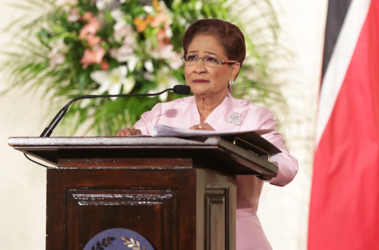
Featured image: Kamla Persad-Bissessar, Prime Minister of Trinidad and Tobago. Credit: Andrea De Silva / (EPA) EFE.
