

On October 14, 2020, a Paraguayan deputy named Erico Galeano Segovia and a Paraguayan businessman named Hugo Manuel González Ramos went to sign an agreement for Galeano's co-ownership in a small town about 60 kilometers from the Paraguayan capital, Asunción. To buy the apartment from Galeano, González brought $1 million – in cash. And as the two men signed the papers, the bills floated into an ATM.
The deal was one of many that Galeano, who would become a senator, made with a powerful criminal network led by Sébastien MarsetUruguayan drug trafficker and suspected money launderer, with an affinity for football.
Marset's network spanned at least three countries and included security officials and politicians like Galeano. González, Paraguayan authorities later claimed: was a straw man for Miguel Ángel Insfrán, who was later accused of trafficking several tons of cocaine through Paraguay to Europe with Marset.
SEE ALSO: Paraguay impeaches senator linked to international drug trade
But the Paraguayan authorities were on their trail. And about a year after González bought the apartment from Galeano, Insfrán and Marset Network was dismantled in the largest anti-drug operation in the country's history. The two men fled.
But the operation revealed a complex network of money laundering fronts used to pump cocaine profits into the Paraguayan financial system, among them the $1 million that went into Galeano's pocket for the apartment. And as investigators discovered, this web extended far beyond real estate transactions.
Fictitious transactions
The million-dollar deal was a win-win for Galeano and Marset. Galeano purchased the condo in 2013 for just $210,590. And while it's hard to know what motivated him to buy the place, when he was elected to Congress in 2018 as part of the ruling Colorado Party, he didn't disclose it among his assets. What is clear is that by selling it at an inflated price, money from Marset and Insfrán's alleged cocaine profits could enter the formal system in a notarized and seemingly legal transaction.
This was not an isolated case. Juan Carlos Ozorio, congressman from the Colorado Party, who was also indictedtransferred property to a shell company owned by Insfrán to launder cocaine profits.
But Galeano's case went far beyond a simple property sale. He also spent years laundering money through the Deportivo Capiatá football club, of which he was president and board member. Notably, Sebastián Marset was a striker in the team where, presumably, he could also keep an eye on things.
Prosecutors said Galeano would draw up invoices showing the club owed him for investments in the team. The club would then repay part of these debts.
The increase in the value of invoices was substantial. As of March 2022, the club owes Galeano approximately $170 (₲1,100,000). As of July 2023, this debt stood at $1.5 million (₲10,379,000,000), according to Galeano's financial disclosures. But this money was not debt. It was due to cocaine trafficking.
The project became a model for Marset. After Paraguayan authorities launched their operation against the network, Marset fled to Bolivia. There, he bought a small team, Los Leones del Torno. He built them a new facility in Santa Cruz and started playing again. And then, like Galeano had done in Paraguay, Marset used his club to launder your criminal profitsaccording to the Washington Post.
Fly high
During the subsequent trial, government investigators revealed that Galeano provided not only money laundering services, but also logistical support to Marset and Insfrán's cocaine trafficking network.
On November 24, 2020 for example, Marset and Insfrán used Galeano's plane to travel to Salto de Guisráon the Brazilian border, and Asunción. It was not registered as a passenger aircraft. Authorities say the flight was one of at least five they took on Galeano's plane.
The impetus for this logistical support came on October 8, 2020, when Paraguayan authorities seized eight planes that Marset and Insfrán allegedly used to transport cocaine. The seizure was a major blow, temporarily halting their ability to travel across the country and organize expeditions.
SEE ALSO: What Marset's Capture tells us about the cocaine trade
That’s when Galeano stepped in to provide in-kind support to the network. Small planes, like the one Galeano loaned to Marset, were essential to operations. It was a similar-style plane that first landed Marset in prison in 2013. That plane was loaded with marijuana and was piloted by the uncle of Paraguay's former president, Horacio Cartes, who leads Galeano's Colorado party. Cards faces his own accusations of links with Marset and Insfrán.
Similarities appear in the Ozorio case. Part of the indictment states, for example, that he helped the drug network by registering a helicopter purchased with drug money. Prosecutors believe they used Ozorio's name in the registry because he had immunity at the time as a member of Congress.
Ozorio resigned from Congress in February 2022. He was charged with criminal conspiracy, international drug trafficking and money laundering a month later. His case is ongoing, after testimony from the defendants, including Insfrán, began in January 2026.
Marset was arrested in Bolivia on March 13, 2026 and extradited to the United States. After his arrest, Bolivian authorities seized 16 planes. They believe Marset used the plane to transport cocaine to Paraguay and travel to organize his illicit business dealings.
Marset, Insfrán and Ozorio are still awaiting trial.
Galeano had his immunity lifted by Congress in May 2023. He was sworn in as a senator a month later. On March 3, he was sentenced to 13 years in prison. On March 11, 2026, Galeano took an indefinite leave of absence from the Senate, but he has not been officially arrested.
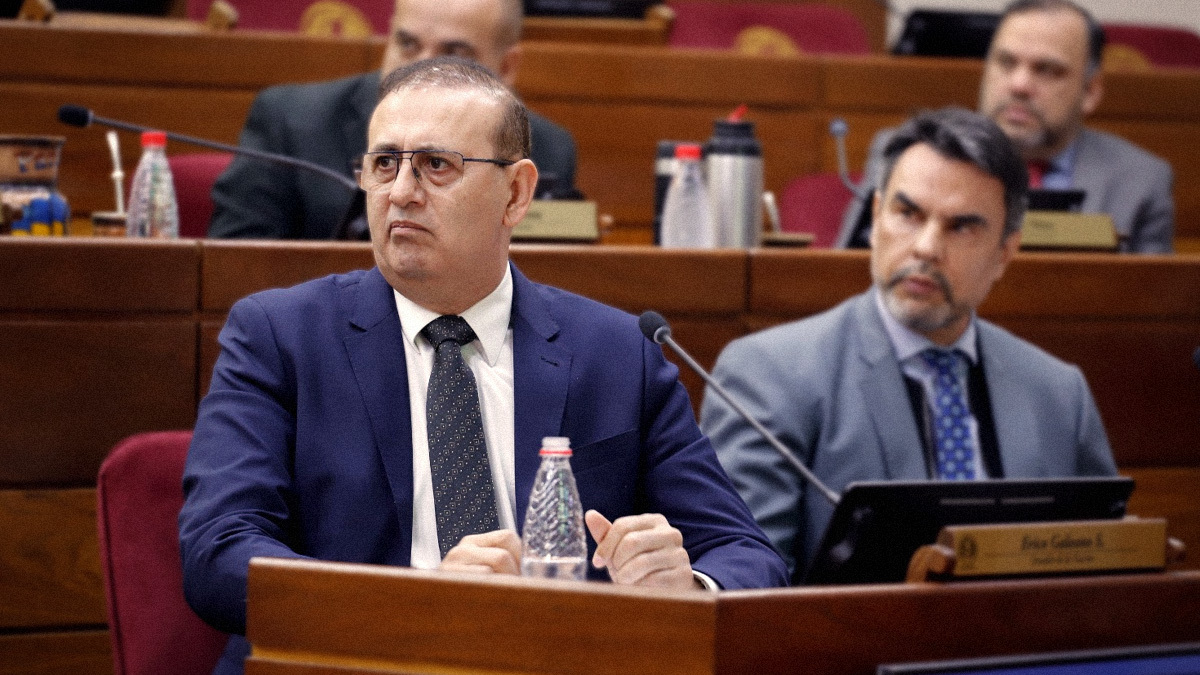
Featured image: Paraguayan lawmakers vote to strip Erico Galeano of his congressional immunity. Credit: Senate of Paraguay
