

The number of migrants apprehended at the U.S.-Mexico border in fiscal 2025 plunged to its lowest level in more than 40 years, upending a human trafficking industry that had become a major source of revenue for organized crime groups.
U.S. Border Patrol agents encountered just under 238,000 migrants during the fiscal year, which began in October 2024 and ended September 30, according to published data by U.S. Customs and Border Protection (CBP).
SEE ALSO: How U.S. policy foments organized crime on the U.S.-Mexico border
That represents a nearly 85% drop from the 1.5 million migrants apprehended at the U.S. southern border in fiscal year 2024. Just two years earlier, in 2022, U.S. authorities arrested a record 2.2 million migrants along the U.S.-Mexico border.
Although the overall numbers have declined, the majority of those encountered remain citizens of Mexico, El Salvador, Guatemala and Honduras, the data shows.
Before President Donald Trump returned to office in January, migrant smuggling and ancillary criminal economies like kidnapping and extortion were arguably the main causes of illegal immigration. most profitable business venture for organized crime groups in Mexico. Some experts estimate that the profits made rival – or even exceed – those of the international drug trade.
But Trump's aggressive campaign to reduce immigration and expel immigrants from the United States has deeply impacted migration flows and smuggling activities. As of August 2025, the Robert Strauss Center for International Security and Law at the University of Texas at Austin estimated that approximately 6,600 migrants lived in Mexican border cities. Nationally, Mexican immigration officials have calculated that there are about 125,000 people in “irregular” migration status.
InSight Crime Analysis
Although migrant smuggling across the U.S.-Mexico border is changing, large numbers of migrants remain stuck in Mexico and exposed to criminal groups.
The Trump administration has effectively shut down the asylum process, and Mexico has increased obstacles to obtaining some type of regularized status to remain in the country. This has prevented migrants from accessing formal employment opportunities in Mexico and left them more vulnerable than ever to attacks by organized crime.
Indeed, 73% of migrants surveyed by the United Nations High Commissioner for Refugees (UNHCR) through September 2025 said they had no immigration or asylum documents to stay in Mexico, according to data obtained through nearly 1,500 surveys of 3,000 people from more than a dozen countries.
Among those surveyed in northern Mexico, more than half said they had been victims of crime, primarily kidnapping, but also theft and extortion. In border cities dominated by organized crime groups, like Ciudad Juárez, criminal networks that once relied on migrant smuggling have now turned into kidnapping migrants who stay, as well as local residents, to generate income.
SEE ALSO: As migration flows decline, criminal groups adapt in Ciudad Juárez
“Organized crime groups evolve, adapt and respond to market dynamics,” said Stephanie Brewer, director for Mexico at the Washington Office on Latin America (WOLA). “So even though there are numerically fewer migrants attempting to cross the border, migrants in Mexico have gone from extremely vulnerable to absolutely vulnerable. »
Indeed, the difficulties that migrants face in obtaining status in Mexico make it increasingly unlikely that they will report the crimes they suffer at the hands of criminal groups or corrupt authorities. This is especially true for predatory crimes like extortion, which have increased in recent years and have one of the highest underreporting rates in Mexico.
“It’s very rare that crimes committed against them are investigated and prosecuted,” Brewer told InSight Crime.
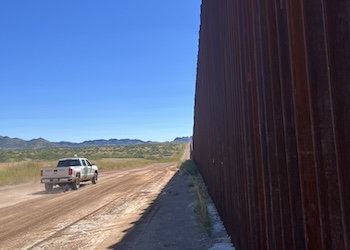
Featured Image: A U.S. Border Patrol agent walks along Arizona's southern border. Credit: Parker Asmann.
