

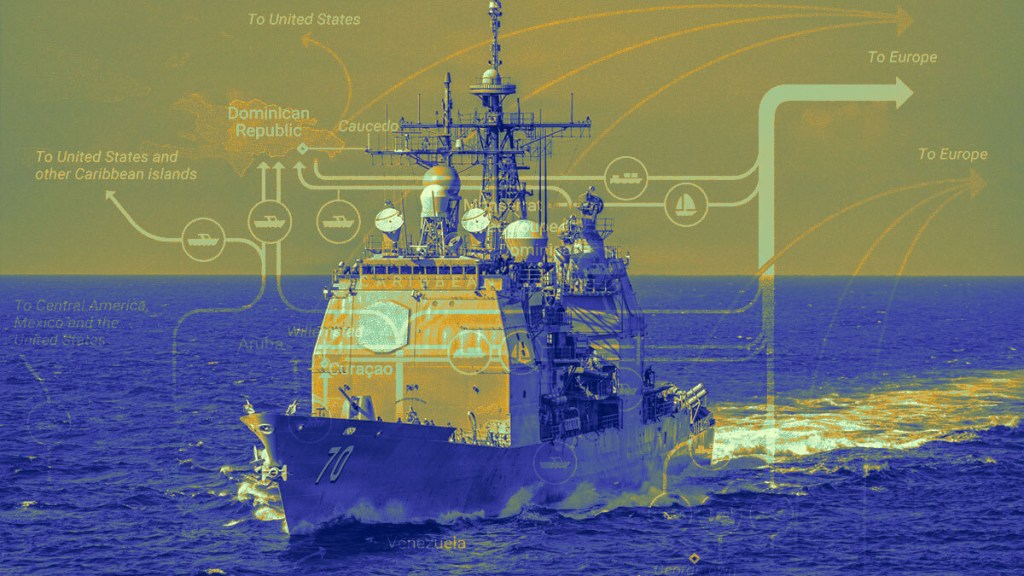
Why Cocaine Continues to Flow in the Caribbean: A Visual Guide

The Caribbean has long been a central node in the global drug trade, acting as a springboard for South American cocaine destined for consumers in Europe and the United States.
Since September 2025, the region has been the center of high-profile U.S. military operations targeting small boats allegedly transporting drugs off the coasts of Venezuela and Colombia. Dozens of airstrikes in Caribbean waters killed at least 61 people during a campaign that Washington framed as an effort to combat “narcoterrorists” who are “poisoning the American people” with drugs.

But the U.S. focus on the Caribbean may not have addressed the bigger picture, as a considerable share of cocaine passing through the region now heads to Europe rather than the United States.
Additionally, the geography of the Caribbean – hundreds of islands and territories spread across a vast maritime space – offers traffickers a diverse range of routes and transportation methods. Targeting a single corridor is unlikely to stop the flow of drugs.
This is how cocaine circulates in the region.
1. Route overview
The Caribbean route began in the early 1980s, when South American traffickers began using the region's islands as a refueling stop for flights carrying cocaine to the United States. Pressure from law enforcement then pushed much of this trafficking to Central America, but the Caribbean never disappeared from the trafficking map. Instead, its role has fluctuated, with smugglers restarting routes when pressure increases elsewhere. Over the past decade, growing demand for cocaine in Europe has contributed to a renewed surge in trafficking in the region.

2. Production areas and transshipment in Venezuela
The cocaine supply chain begins in South American production areas, primarily Colombia. Part of this product is shipped directly from Colombia to Central America and Mexico, from where it continues north to the United States. But much of it is routed through Venezuela, taking advantage of its long, porous border with Colombia and vast coastline. Once inside Venezuela, some shipments are transported east to Guyana and Suriname, or south to Brazil. Most, however, are moved to coastal departure points using a combination of river, road and air transport. From these transshipment centers, shipments begin their next leg towards the Caribbean islands.

3. Venezuela towards ABC
The ABC Islands – Aruba, Bonaire and Curaçao – lie just off the coast of Venezuela, making them a key stopover for cocaine shipments shipped from Falcón state. From the islands, traffickers transport smaller cargoes north across the Caribbean on small vessels – such as fishing boats and fishing boats – or cross the Atlantic to Europe on container ships and private yachts.

4. From Venezuela to Trinidad and Tobago
Further east, Trinidad and Tobago lies just a few kilometers from the coast of Venezuela. Traffickers use small boats to transport drugs to the islands from Sucre and Delta Amacuro states. There, local networks transfer the loads to storage facilities. Shipments are then transported north to the United States, passing from one Caribbean island to another, or directly to Europe on cargo ships and yachts.

5. From Venezuela to the Dominican Republic
Traffickers often transport cocaine via the southern coast of the Dominican Republic, where they unload the shipments from boats or small vessels. The long, lightly patrolled coastline and proximity to South America make it an ideal transit area. Criminal groups also exploit the porous border with neighboring Haiti to smuggle cocaine into the Dominican Republic via roads and trails. Once inside the country, the drugs are transported to major ports like Santo Domingo and Caucedo, where they can be hidden in shipping containers before crossing the Atlantic to Europe or heading to North America.

6. Route disruptions
In September 2025, the United States targeted fast boats and small ships with deadly airstrikes and deployed a flotilla of military assets to the southern Caribbean. These operations disrupted shipping channels between Venezuela and the ABC Islands, as well as routes to Trinidad and Tobago. Some traffickers have halted their operations or left heavily monitored areas. But the campaign has only disrupted some Caribbean trafficking corridors while leaving others open. There is also evidence to suggest that criminal networks have changed their routes east, to Guyana, Suriname and Brazil, to avoid the US military.

*Sara García, Henry Shuldiner, Sean Doherty, Beatriz Vicent, and Cassia Jefferson contributed research to this report.
The position Why Cocaine Continues to Flow in the Caribbean: A Visual Guide appeared first on Crime in sight.
