

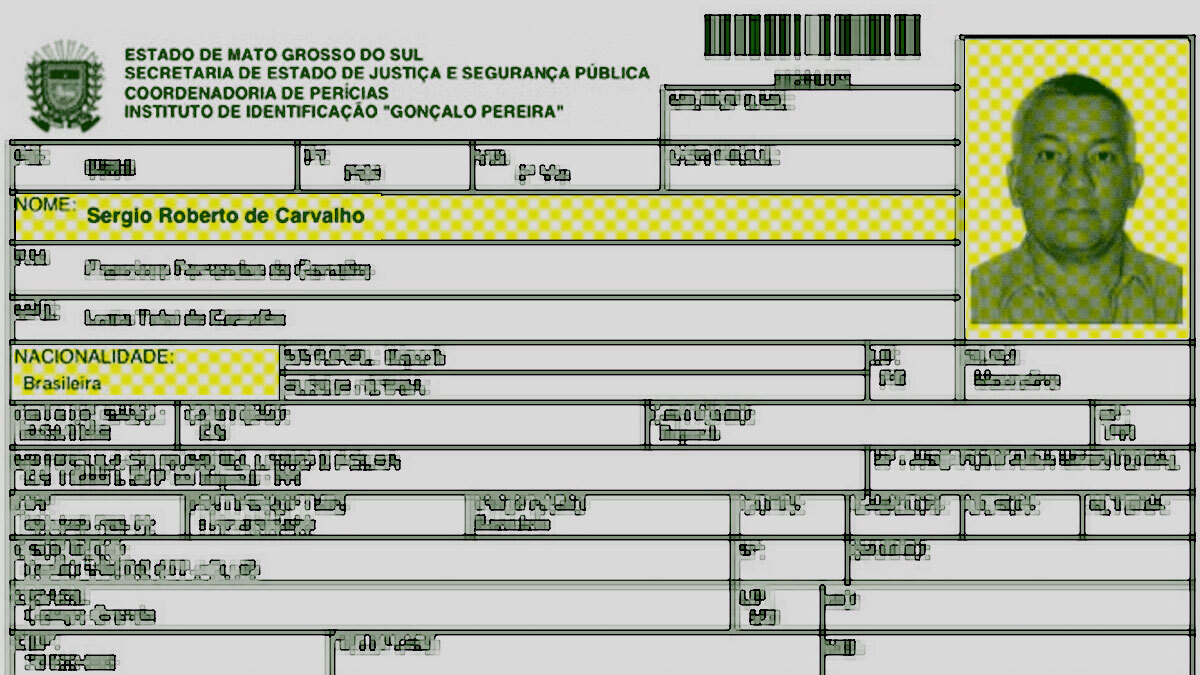
As the trial of Sergio Roberto de Carvalho, nicknamed Brazil's version of “Pablo Escobar”, opens in Belgium, the charges against him show how cocaine trafficking has become an increasingly murky and complex global trade. It also highlights Brazil's growing role in the trade, particularly in transporting cocaine to Europe, and how low-profile brokers are replacing high-profile capos.
Carvalho was arrested in June 2022 after a long manhunt. A former major in the Brazilian military police, Carvalho's criminal career fostered false identities and corruption as primary trafficking tools.
1. The rise of the “invisible” broker
The Carvalho case shows how high-profile crime bosses like Escobar, to whom he is often compared, no longer dominate the supply chain and have given way to low-visibility brokers who coordinate shipments across borders without directly controlling territory or armed groups. Brokers function as key nodes in international networks that are increasingly complex and increasingly difficult to dismantle. Sebastian Marset, another key regional broker, was recently arrested in Bolivia, and their role is increasingly becoming the rule rather than the exception.
SEE ALSO: Where in the world will Brazilian Pablo Escobar end up next?
2. Corruption and impunity reign
Carvalho was convicted of various crimes while still serving in the Brazilian military police. He was sentenced to 15 years in prison for drug trafficking in 1998, but was not kicked out of the force until 2010. This could suggest that corruption is proving as productive, if not more so, than violence for today's trafficking networks.
Carvalho's use of multiple pseudonyms and fraudulent documents allegedly allowed him to operate on every continent, showing how modern traffickers exploit weaknesses in international financial and identity systems. He was arrested in Spain in 2020 under a false Surinamese identity, and authorities did not know at the time that the man they arrested was in fact Carvalho. After paying his deposit, he sent the Spanish government a death certificate claiming that “Paul Wouter” – his pseudonym surname – had died of Covid-19. He then allegedly lived in Portugal, Ukraine and Dubai, presumably under different identities, until he was finally arrested in Hungary in 2022 while using a fake Mexican passport.
SEE ALSO: Fake death certificates and vans full of cash – Brazilian Pablo Escobar finally arrested
4. Build Brazil's role as a launching pad for cocaine to Europe
Prosecutors accuse Carvalho of organizing drug flights from Peru and Bolivia to Brazil, then sending the cocaine through Brazil's various international ports to Europe, starting around 2017. At the time of his arrest in 2022, authorities believed he had coordinated the trafficking of at least 45 tons of cocaine to Europe.
